As for the vineyard itself, it goes all the way back to 1885, when another Italian immigrant, Bartholomew Lagomarsino, first planted Zinfandel and Petite Sirah grapes on the property (the Battaglini family has owned it since 1988 and added Chardonnay grapes in 1996). It is noteworthy that Joe is producing his wines (about 2,500 cases a year) from these same 125-year old vines, and with old methods using no irrigation (totally dry farmed) and no chemicals and by allowing all their wines to go through natural fermentation (no added yeasts).
They are located at 2948 Piner Road in Santa Rosa, CA, and I highly recommend a visit if you are in the area. The tasting room is small and quaint, adorned with medals and prize ribbons and pictures of the old country and Joe will treat you just like one of the family! As I indicated in the previous post, I thought all of the wines were excellent.
"VITTE VECCHIE, VINO BUONO"............Old Vines, Great Wines


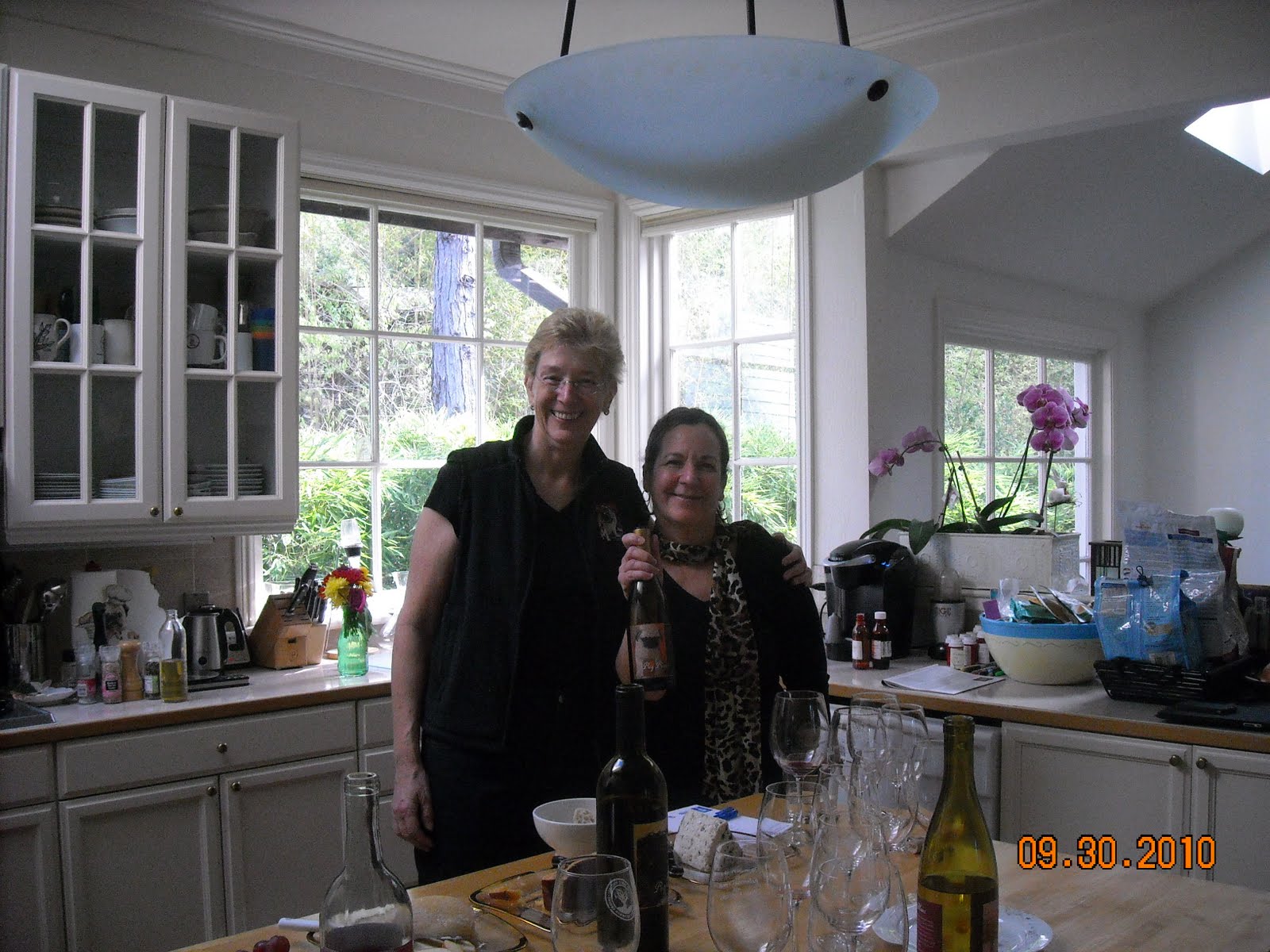
 On Sunday, Oct 3rd, my friend Daniella and I spent a wonderful afternoon in Mill Valley (CUTE little town!) at the beautiful home of Peggy Bennington, who IS Pug Wine. As they do not have a tasting room YET (hopefully they will have one open next year in San Francisco), Peggy was gracious enough to offer us a private tasting, and we certainly felt honored to have been invited for such a special and generous treat. Pug Wine is, of course, so named because Peggy is another pug devotee, and has 3 of her own, who were all happy to welcome us into their space. Peggy had an amazing spread on the kitchen island all ready for us - along with bottles of wine adorned with exquisite labels that are tiny works of art on their own (all Pugs of course), she offered a tasty array of cheeses, breads and fruit. We started with Pug Rose, then followed with Pug Blanc, Pug Pinot and finally Pug Cab. We really liked ALL of them! We purchased a bottle of the 2007 Pug Blanc each, a "vibrant" Rhone-style white blend of Marsanne and Roussane grapes from the Russian River Valley - with the aromas and flavors of grapefruit and apple, finishing with pineapple and vanilla. Our second favorite (but, as I said, we felt they were all very good) was the 2007 Pug Cab, which is made of grapes from Hoopes Vineyard in Napa - it was exceptionally balanced, rich with bright fruit flavors (I thought, plum and cherry), and had a gorgeous, dark color. I will definitely be purchasing this one in the future for a special occasion! Thanks again to Peggy, and I hope everyone who reads this will go to the website and try a bottle - I promise you will not be disappointed!


 Last Thursday our Fall Practices class met at Klopp Family Vineyards in Sebastopol to observe a local vineyard's Pinot noir harvest. Lauren Klopp spoke to us about their family's vineyards (50 acres in total), where they exclusively grow Pinot grapes for some of the top wineries here - like Merry Edwards and Kosta Browne. Lauren's Dad planted the vineyards in the 90's on what was once apple orchard land. She told us that their vineyards are mostly dry farmed, with no irrigation, and that they don't use harsh chemicals. The vineyard sits atop a hill, above the inversion layer, with one of the most beautiful views I've seen here. At 7:30 a.m. it was stunning.
